

One Trial after Another
And so, a book was published, and another religion was organized. As with other newborns, it was fragile. There was persistent opposition from those who held onto traditional Christian beliefs and did not feel there was any reason for another witness to Christ. The local ministers and preachers lost all patience as they saw some of their weaker members being led astray. They were open in their opposition and went to great lengths to keep their memberships.
Joseph Knight and his family formed their own branch of the church. They became known as the Colesville Saints. Joseph Knight’s son, Newel, was a strong member and leader of this branch.
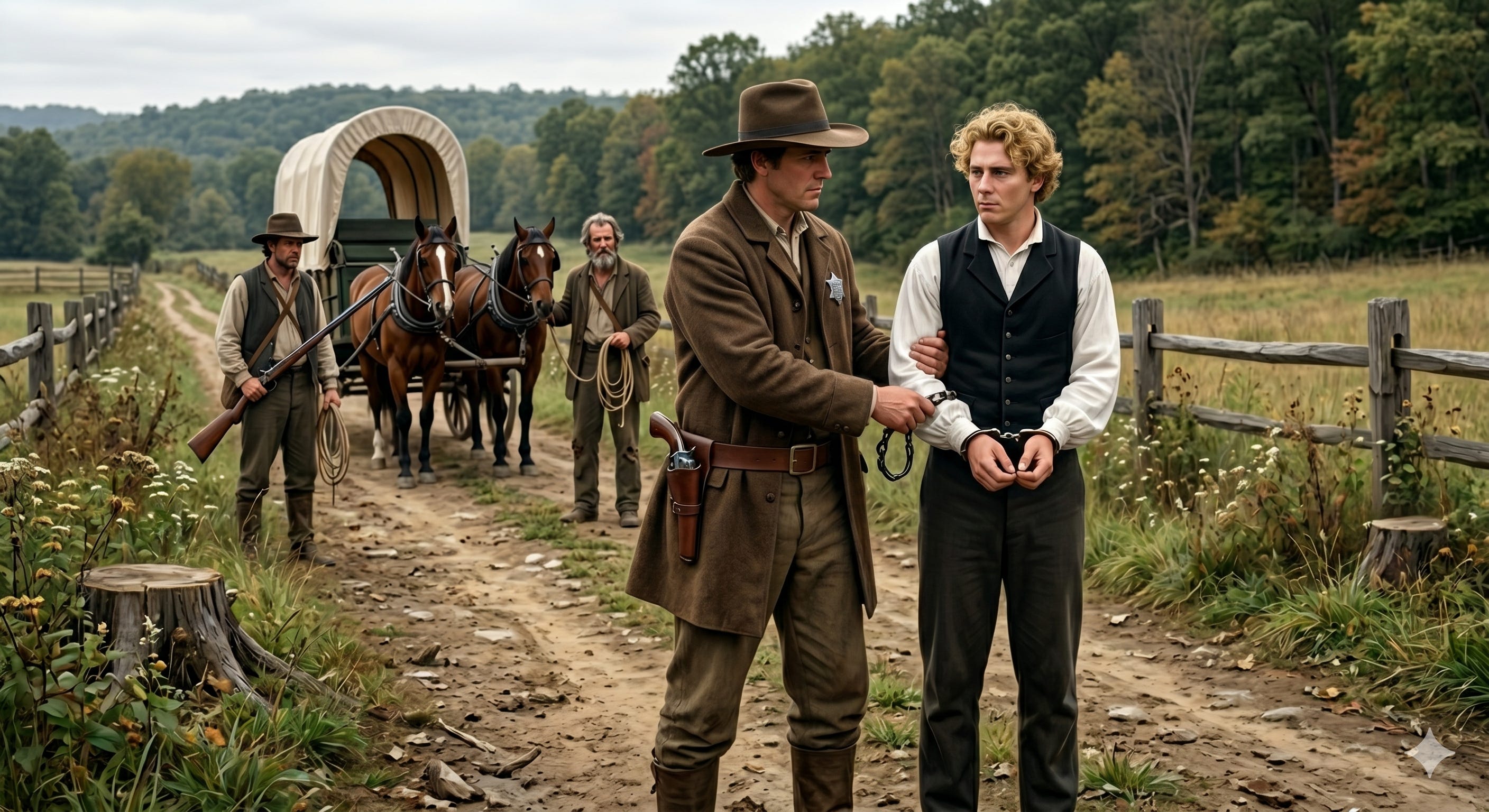
Joseph was arrested and taken to South Bainbridge under the charge of ‘disorderly conduct,’ which in this case meant using priestly powers for gain. After several days of confinement, and at the end of his trial, he was acquitted. On his return trip to Fayette, another constable placed him under arrest for additional trumped-up charges. During this second trial, if indeed it could be called such, he had the worthy representation of men who knew the law and were able to break the testimonies of those who would make false accusations. Once again, he was acquitted and released.
Joseph returned to his Harmony home, his wife, and the work of the farm. He maintained correspondence with his friends in Fayette and was disturbed when he learned Oliver Cowdery had publicly accused him of making a false revelation. He was aghast and rightly determined this was not an issue that could be resolved with pen and ink. He made a hasty journey to convince Oliver and the Whitmers the revelation in question was indeed from God. This done, he returned to Harmony where he would often receive visitors.
Some visitors were new converts and some stood boldly in opposition to this new church. One of those who opposed, and was especially outspoken, was Isaac Hale’s brother-in-law, Nathaniel Lewis. This man used his influence to turn Isaac completely against his son-in-law. Joseph and Emma both felt the strain.
Each day brought new problems. Opposition grew so strong that it became apparent that Joseph would have to pack their belongings and, with his family, leave Harmony. They would return to the Whitmers’ in Fayette, New York.
The early fall sun was bright, but temperatures were now cooling. Despite the brightness of the sky, upon his arrival, Joseph’s day quickly became clouded when Oliver informed him that Hiram Page had been giving revelations concerning the building up of Zion.
“By what power or authority?” Joseph inquired.
“He has found a stone of his own.”
“What he sees in that stone is not of God.”
Oliver became angry. “You think you are the only one to receive revelations for the whole church?”
“Most certainly.”
In the days that followed, Joseph often received the word of the Lord: “No one shall be appointed to receive commandments and revelations except for my servant, Joseph Smith Jr.” When Oliver took it upon himself to take a stand against Joseph and his authority, the Lord said, “Thou shalt not command him who is at thy head.” And when the converts began attempting to predict where Zion would be, Joseph heard from the Lord again: “No man knows where the city of Zion shall be built. It shall be on the borders of the Lamanites.” In regard to Hiram Page and his use of a stone, the Lord said, “The things which he has written from that stone are not of me. Satan has deceived him.”
Peter Whitmer and Oliver Cowdery were sent on a mission to the Indians. They were accompanied by two new converts, Parley P. Pratt and Ziba Petersen. They would, of course, preach to all they would meet along the way, but it was expected the bronze-skinned natives would willingly embrace the gospel once they understood their heritage and the blessings in store for them. Armed with nothing more than copies of The Book of Mormon and the copy of the revelation that had sent them on this journey, they set forth, firm in faith.
December winds howled through the rafters the day a sleigh brought two middle-aged men to Fayette. The pounding of horses’ hooves caught everyone’s attention. When the carriage came to a stop, Joseph saw two men step down. The older man had bushy eyebrows with salt-and-pepper hair and carried himself with a dignified air. When he spoke, his enunciation was clear.
“My name is Sidney Rigdon, and this is my companion, Edward Partridge.”
Sidney, it turned out, already considered himself to be an elder of the church. He had been converted by a former member of his church, now one of the brethren and a Mormon. Rigdon had formerly been a minister of the Disciples of Christ until he had a serious disagreement with the sect’s leader, Alexander Campbell. He was now convinced that the Book of Mormon was divinely inspired. “It speaks to my yearnings,” he said.
As for his companion, Edward Partridge, he was a Scotsman and known to be cautious. Even so, he became convinced that the Book of Mormon contained the fullness of the New Testament. Although he may not have been consciously aware of it, he sought assurances from Joseph that he really did speak for God, a claim Edward considered to be very bold.
“What kind of assurances would you have?” Joseph asked.
Edward did not answer immediately. Sidney explained. “We want to come to know you and judge for ourselves.”
Joseph welcomed the men and, in continued conversations, discovered they were part of a community of about one hundred who denounced private property and shared all their goods in common.
“Kind of like the Shakers,” Joseph suggested.
“Heaven’s no!” Edward said. “We are not Shakers and would not travel so far to see Ann Lee. That group certainly does have strange beliefs. It seems to me that they will surely die out with their outrageous views on celibacy. Our intent is simply to return to the days of old and worship in purity as did the apostles of old.”
In the days that followed, the guests were known to be walking about Fayette and nearby Waterloo, openly discussing with neighbors the background of the church and this man who now called himself a prophet. They discovered Joseph had recently been arrested, but when they delved into the particulars of the incident, it was clear that the fault lay with the accusers.
That Sunday, Edward Partridge responded to Joseph’s open invitation to speak. “I believe not only in the gospel that has been brought forth for restoration by also in the latter-day prophet who has been so instrumental in bringing it forth.” Shortly after this public confession, Edward was baptized in the icy waters of the river. Afterward, he was given a blessing and called forth to preach the gospel as with the voice of a trumpet.
Keys to the Mysteries of the Kingdom
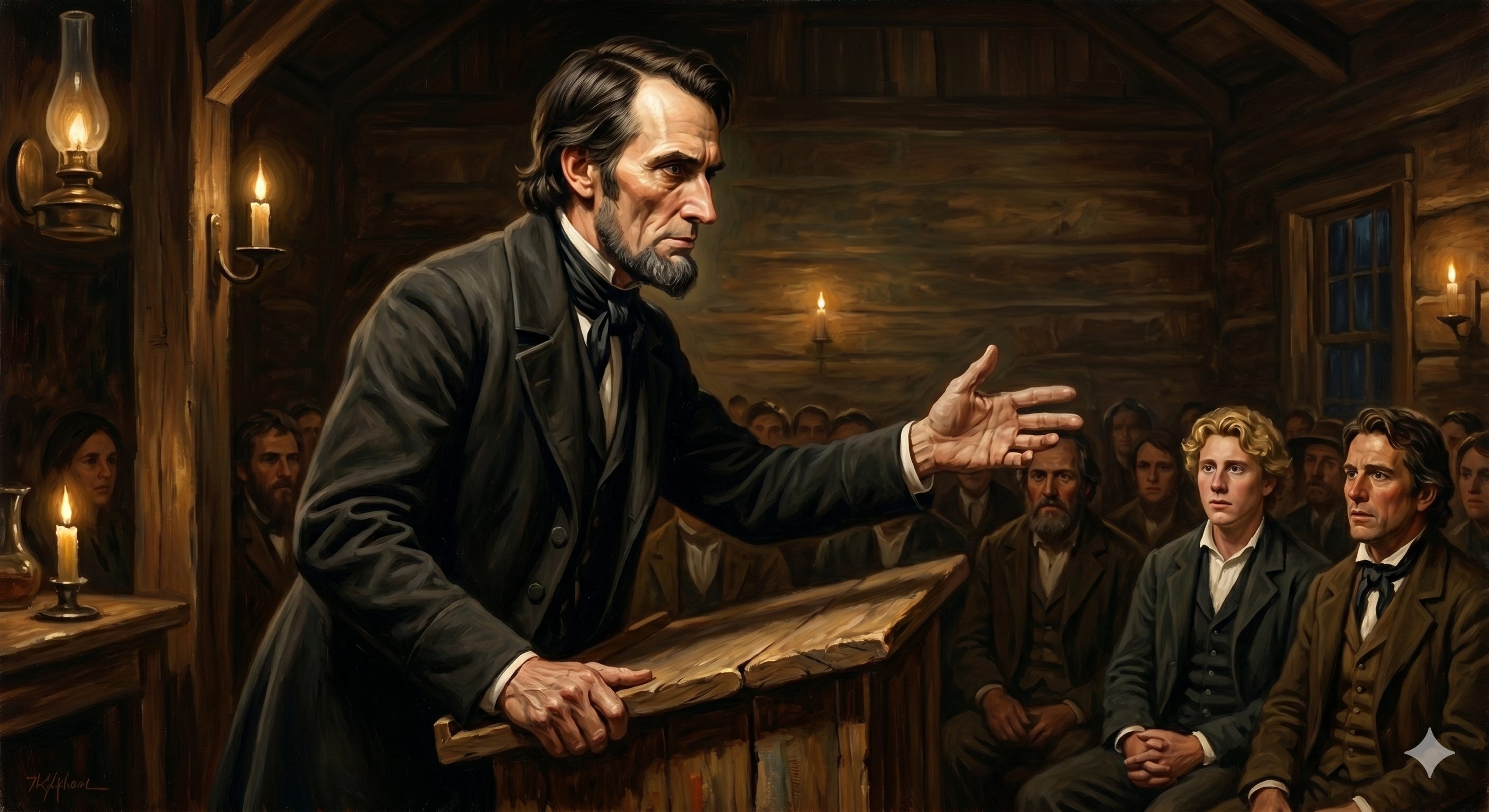
Revelations seemed to flow from Joseph’s lips. Sidney Rigdon was informed Joseph had been given the keys to the mystery of those things which had been sealed. Rigdon himself was commanded to write for Joseph. Consequently, the spirit of these two new converts was afire. They exulted, “We will be partakers in the rebuilding of the primitive church. We’ll pave a way for the coming of the Lord and the great millennium.”
One day, Sidney suggested Joseph take on the task of a revision of the scriptures. “Alexander Campbell is working on such a revision. So many people find the King James version difficult to read, although I certainly cannot understand why.”
“Many plain and precious things have been taken from the scriptures,” Joseph said. “I have not asked the Lord for direction along that line, but I have begun work on another book.”
Some of the men showed concern about the lost books mentioned in the Old and New Testaments.
Sidney nodded. “Yes. Like the Epistle of Paul alluded to in Ephesians.”
“It has never been found,” Joseph said. “There are others, as I’m sure you know.
In reading Jude, the fourteenth and fifteenth verses, one is led to believe that Enoch had a revelation concerning the second coming.”
“I’m familiar with it.”
“As I have been given the keys to the mysteries that have been hidden from the foundations of the world, I asked about the prophecy of Enoch, and had the word of the ancient lost script opened before me. This is part of the writings of Moses. I must continue that work.”
Sidney’s interest was piqued. “Surely I can help,” he said.
From then on, Sidney served as Joseph’s scribe as he continued to translate what he claimed to be a lost conversation between God and Moses. Soon their work included a translation of the New Testament.
“It’s not a translation,” Sidney said. “It’s already in English. It can only be a revision.”
“We will add many precious things that have been taken from the Scripture and we’ll add them according to revelation. Therefore, it is a translation.”
“Very well,” Sidney said. He was happy to be working beside Joseph, the prophet.
Sidney Rigdon’s contentment was short-lived. He became homesick and missed his wife and family. He began to talk incessantly about the community of believers he had left behind and wanted Joseph to move to Ohio and to merge with his existing community.
At first, Joseph was reluctant to agree but as Sidney continued to talk about this group and the positive aspects of such a move, he decided to seek a revelation. The word of the Lord came with a promise: “I hold forth and give unto you greater riches, even a land of promise, a land flowing with milk and honey. I will give it unto you for the land of your inheritance.”
This revelation caused much discord within the church. The community had grown. Many of the members had lived their lives in that place and were not willing to leave their homes for a strange land. Some felt that such a move, with so many, would be impossible.
Oliver voiced his own concerns and complained: “Ever since that Ohio Preacher came around, he seems to have more influence on you than any man alive.”
David Whitmer had issues as well. “Whatever you want becomes a revelation.”
Martin whined. “They say you invented the revelation to deceive people so that in the end you might gain.”
“I have nothing to gain,” Joseph said, “other than the satisfaction of doing the will of the Lord.”
David continued to speak against the move. “Those that have property they can’t sell don’t want to leave it behind. It’s not easy to rent to strangers. The losses
will be great.”
“You speak only of temporal losses,” Joseph said. “We have been promised a land flowing with milk and honey upon which there shall be no curse when the Lord comes. The farms which will be left behind are insignificant. When the land of our inheritance comes into view, they will have no regrets about what was left behind.” Regarding the subject of relocation, Joseph’s word was final
The End
NOTE: Next week: Part II: Kirtland, Ohio and the Colesville Saints
A Note re: Images:
All the images in this post have been created by Gemini AI. It’s brilliant, but much like you and I, not without flaws. Gemini and I continually work together to tweak the details, and strive for perfection. Until then, think of these images as a series of historical paintings by different artists trying to capture the same story. I hope you’ll look past the minor quirks and enjoy the atmosphere they bring to the history.
I sincerely hope you return week after week to get the full story.
Just Judy, The Author
Oh,, Jay, I just received this message re: last night's comment: Your comment didn't go through. Click below to post your comment on the website:
I don't want you to think I didn't see it or worse, I simply ignored it. I was fantastically pleased. And, knowing that you got your degree from BYU makes your opinions really count. After reading your review, I had to go back and read the chapter myself.
The things you say about 'humanizing these historic figures...' make me feel good. That is the attempt. Maybe I suceeded a little bit.
I could hear the horses hooves as I wrote, but I missed the wind. I guess it just passed by.
I shared your note re: Gemini AI with Gemini. He was pleased. I guess we all like compliments. You are really good at this.
Thanks a bunch.
This is a fantastic chapter, Judy. You’ve done a wonderful job humanizing these historical figures—the mounting frustration between Joseph and Oliver over Hiram Page's stone feels authentic and tense. It moves the history out of textbooks and into a living, breathing narrative.
The arrival of Sidney Rigdon and Edward Partridge in the cold winter is vividly described—I could hear the horses’ hooves and the wind. You excel at setting the scene's atmosphere before exploring the complex theological shifts.
I really appreciate your note about the Gemini AI artwork! Viewing them as a 'series of historical paintings by different artists' is a beautiful way to frame it. The images add such a great visual texture to a fascinating, deeply researched piece of storytelling.